Strengthening the administrative capacity
The Project was financed entirely (100%) by a new financing means the "Transition Facility" 5/2004 - 2006, approved by the European Union to offer assistance to new Member States so as to create and strengthen their administrative capacities.
Assignment
The Department of Merchant Shipping (DMS), of the Ministry of Communications and Works of the Republic of Cyprus, assigned, on behalf of the Cyprus Ports Authority (CPA), after open international tenders (May 2006), the execution of the project for “Strengthening the administrative capacity of the Cyprus Ports Authority” to the consortium of companies “PLANET - AMSTERDAM PORT CONSULTANTS - TREDIT”.
Budget
The budgeted amount, according to the tender documents was estimated at 1.000.000 €. The initial contract, signed on 11/10/2006 in Nicosia, according to the economic offer of the Contractor was for 849.400 €. This contract was modified on 13/12/2007, as per relevant article of the contract documents, to cover the execution of 24 additional training days, consequently increasing the contracted amount to 879.664€. Since 2 out of the forecasted 24 additional days were not executed, the contracted amount was decreased proportionately and the final payable sum for the contract is 877.142€.
Financing
The project was financed entirely (100%) by a new financing means, the “Transition Facility’ 5/2004-2006, that was approved by the European Union (Accession Treaty, article 34). This measure, following from the Pre-Accession assistance, aims to offer economic assistance to new Member states, so as to create and strengthen their administrative capacity and structures, to maximize the effectiveness and to improve services provided by government and wider public sector services. More specifically, the project was financed through the Transition Facility for 2005.
Target groups
The project addresses CPA as well as the total of the public and private institutions that are involved in the planning, administration and provision of services in the port sector of Cyprus.
Activities
The project, as per tender documents, was implemented through a Single Service Technical Assistance Contract, covering eight activities, organized in two components: Component 1: Restructuring the CPA & Re-engineering the port system and Component 2: Training & Creating sustainable training capacity (further described elsewhere).
Duration
The contract was executed by 11/5/2008, within the time limits provided for by the tender documents (19 months).
Monitoring
Monitoring of project progress was carried out through the preparation of monthly, quarterly (for 2006 & part of 2007 also 6-monthly) reports submitted to the Planning Bureau of Cyprus (and through them to EU), regular meetings of the Project Organisation Committee, meetings between Contractor & CPA, as well as via a Risk Management Plan which was periodically updated to this effect.
Evaluation
The project was evaluated 2 times by external assessors and their recommendations covering issues for improved participation of private sector in training, future training activities and highlighting relevance of project recommendations to EU policies were fully covered in the project.
General objective
The general objective of the project is to promote the establishment of a modern port system in line with EU aquis, enabling Cyprus to respond to and participate in relevant EU policy measures.
Special objectives
More specifically the project has the following purposes:
- To enhance the effective operation of the Cyprus Ports Authority through the development of a modern organizational, functional and management capability in order to improve the management and functioning of the port system, including the enhancement of maritime safety as it relates to port areas, as well as the application of best practices, measures for sustainability and improved reporting requirements.
- To improve the capacity of major stakeholders (mainly shipping agents, licensed porters, stevedores) to implement the relevant EU acquis and practices.
Relevance of the project to EU policies for the Transport Sector
The objectives of the project are especially relevant with the objectives of Community Policies in the sector of maritime transport and shipping, as formulated in the recent statements of EU on common maritime policy and common policy for the ports (Towards a future Maritime Policy for the Union: A European Vision for the Oceans and Seas, COM/2006/275 final - Communication on a European Ports Policy, COM 2007/607 final).
More specifically, the special objectives of project present important or particularly important affinity with the following objectives of Community policies and contribute in their achievement:
- Increase of efficiency and productivity of ports
- Growth of electronic shipping (e-maritime)
- Enhancement of self-reliance/autonomy of Port Authorities
- Transparency in issues of financing, concessions and pricing
- Improvement of protection of safety and health of workers in the maritime sector (ports)
Over all
The Contractor carried out the activities of the project and through the preparation of work packages (WP, further described elsewhere), the following were achieved:
- Development and submission of multi-faceted, reliable proposal, supported by a well structured plan of action for the smooth and gradual improvement of the Cypriot port system, including a preliminary draft of new legislation as well as preliminary draft for information technology system (WP F, B, E). Achievement: 100%.
- Development and submission of multi-faceted proposal for the restructuring of CPA into a reliable organisation, functional and adapted to the new requirements of a modern port system and provision of port services, with rationalisation of structure, processes and pricing system, as well as the development of a proposal for the setting up of a container handling company responsive to the new requirements safeguarding at the same time maritime safety (WP D, A). Achievement: 100%
- Development and submission of a complete proposal for a functional ‘best practices guide” giving guidance on the practical aspects of the procedures to be followed for assignment of port services to the private sector, that should be followed in the framework of the EU aquis (WP C and part of WP D). Achievement: 100%.
- Planning and execution with success training actions, the duration of which could vary, addressing the various levels of public and private sector personnel, providing in total at least 192 days of training to at least 585 individuals, covering administration, management and operational aspects of ports and port services (WP G and WP Ha). Achievement: 100% for training days, 103% for overall participation.
- Development and submission of an all encompassing proposal for a well structured, reliable, program for continuous training, covering the preparation of educational material and support measures including the upgrading of CPA website to support training actions, proposing a structure that will allow its occasional activation so that progressively all persons occupied in the port sector in Cyprus will acquire the essential qualifications thus strengthening the efforts for access to the market of port services on the basis of qualifications and also allowing for future collaborations with other interested parties in the region on issues of education, information and applied research relevant to the port sector (WP H). Achievement: 100%.
Of special relevance to the training carried out under the project Achievements on quality of training
- The relevance and quality of the seminars as well as the quality of the trainers were assessed by the trainees by filling in appropriate questionnaires. The findings of the statistical evaluation were very encouraging since, overall the score was over 85% for relevance and quality.
- The workshops carried out mostly for the benefit of CPA’s staff, on balanced scorecard, pricing policy, personnel evaluation and standardization of contracts, were very well attended and practical examples were elaborated.
Achievements on participation
- While overall participation in the training programme was 103%, the success of the ‘train the trainer’ programme surpassed expectations achieving 440% of the target values.
- Under the ‘extension of contract’ special sessions were organized with each of the major stakeholders to address their specific needs thus ensuring the participation of private sector (which in general was low in the project), complementing efforts for dissemination of project findings and encouraging submission of their views which were taken into account in the development of recommendations made under this project.
Measures for enhancing the sustainability of future training
- The success of the ‘train the trainer’ programme provides in-house trained trainers to be activated as required for future training actions.
- The up-graded CPA website provides a functional basis for future training actions and also includes training material and presentations delivered under this project.
- The training of ‘learning nucleus’ provided in-house skills for the assessment of training needs and preparation of training programmes.
Action plan for the restructuring of CPA and the port system in Cyprus
The proposals under the Action Plan, a multi-faceted, reliable, plan for the smooth and gradual improvement of the Cypriot port system, build on the work executed by the Contractor under the various activities of the project. The basic recommendations are outlined below:
- Scenarios proposed. The Consultants examined three (3) scenarios (basic, alternative and a variant of alternative scenario), as regards the proposed activities included in the Action Plan. The scenarios are differentiated only in respect of the proposed activity of institutional reform of CPA and the activity concerning the organisational restructuring of CPA.
- Activities proposed. The 16 activities of the basic scenario (15 for the alternative scenario, 14 for the variant of alternative scenario) cover the following:
- 2 activities for institutional, organisational change (not included in the alternative/variant of alternative scenarios).
- 5 activities for improvement of systems (land-planning for the container terminal at Limassol port, system of assigning port services/issuing of licences, description of functional roles of CPA personal, evaluation of CPA personnel, application of balanced scorecard, pricing policy)
- 9 activities for information technology (port community system, document & workflow management, asset management, new IT infrastructures & relevant software, management procedures/policies, software for management of grantry cranes, staffing of IT services).
- Strategy for implementation The Contractor recommends horizontal actions to support the efforts for change and that project management team should be set up to facilitate administration. The Contractor estimates that about 5,5 years are required for the implementation of each scenario and suggests that the scenarios may be implemented sequentially, if so decided.
- Resources required. The cost of implementation is estimated at about 8m euros, depending on the extent of use of external consultants, while 144-171 man-months effort will be required on the part of CPA personnel.
Recommendations for creating a sustainable training capacity
The proposals for future training, organised into short/medium term and long term for the gradual development of a sustainable ‘learning centre’ build on the work executed by the Consultants in the relevant activity/ work package as well as the experience gained under the training activities executed under this project, especially under the ‘train the trainer’ activity. The basic recommendations are outlined below:
- Set up proposed. In the short/medium term the Contractor suggests the setting up of a ‘learning centre’ under the Department of Personnel & Administration of CPA. Depending on success/interest, in the longer term an independent company to be set up with the participation of private sector.
- Resources required. In the short/medium term, this ‘learning centre’, is to be assisted by the ‘learning nucleus’ trained under this project in the assessment of training needs and preparation of training programmes also making use of the trainers trained under this project (train the trainer activity) as well as external trainers. Depending on success/interest, in the longer term the company to be set up will have its own board of directors, organisation chart and personnel.
- Activities proposed: In the short term the ‘learning centre’ will aim to cover the immediate needs of CPA in training, and depending on success to extend its activities to cover wider port sector needs in training as well as other support actions. In this connection, the Contractor has already upgraded the CPA web-site and posted major training material delivered under this project. In future it can extend its activities to cover further training needs of the port sector in Cyprus, needs in applied research and also to collaborate on issues of interest to ports in Cyprus and the region. Also the Contractor suggests the use of combination of learning/teaching methods into a ‘blended learning’ approach, which they describe in detail.
- Strategy for implementation. The Contractor suggests that a training policy should be adopted and personnel should be appointed for the ‘learning nucleus’ while support measures should be taken to highlight the relevance of training to employment in CPA and the port sector in Cyprus.
For each of the activities in the terms of reference the Contractor investigated and evaluated the existing situation, examined trends in the port industry at large and especially in the EU, took into account EU directives and policies as well as needs of the Cyprus ports industry and stakeholders requirements and submitted reports (Work Packages, WP) for each activity. The major topics/recommendation covered in each activity/WP are outlined below (these are contained in the deliverable and activity reports which compose the WP for each activity).
To avoid repetition it is noted here that in every WP the Contractor provides an evaluation of training needs (which as per tender documents had to be taken into account for the development of the training programme under this project) and, if relevant, suggestions for corrective actions for the better execution of the project or future actions. The latter are integrated into WP F for Component I and WP Gd and WP Hb for Component 2.
Activity A: Feasibility Plan for setting up a Container Handling Company
WP-A gives the methodology, results and recommendations culminating in the following:
- Proposal for land planning of the container terminal under three different scenarios.
- Proposal for organisation and systems required for an efficient and viable terminal.
Model and Draft articles for setting up of company are given under WP-B while model contract for assigning port services/areas is given under WP-C.
Activity B: New legislation for port system
WP-B gives the methodology, results and recommendations culminating in the following:
- Description of required changes in legal framework in line with the ‘landlord’ model.
- Model documents and statutes for founding the proposed new companies.
- Examination of early retirement schemes.
The above was preceded by an interim report on alternative models of port structures including assessment of developments in the port industry as well as description and evaluation of existing set up of Cypriot port industry. This report was also instrumental in the preparation of WP-D.
Activity C: Guidance on the implementation of market access to port services
WP-C gives the methodology, results and recommendations culminating in the following:
- International experience with regard to the cooperation of public-private sector schemes (PPP), necessity, definition and types of PPP.
- Practical guidance for the whole life circle of a PPP project (diagnosis, process, assignment, follow-up and control, termination or renewal of contract) in line with EU aquis.
- Summary list of main points/drivers (standardised lists of preparation, follow-up and control, complemented with basic directions for their application by CPA)
- Model contract for concession of ports/port services/areas.
- List of international bibliography on issues PPP for further reference.
Activity D: Proposal of new CPA structure
WP-D gives the methodology, results and recommendations culminating in the following:
- Organization chart, detailed job descriptions with links to administrative processes.
- Detailed model for application to ports and port services of a balanced scorecard for the monitoring and evaluation of operational and financial performance.
- Model contract documents for assigning port services / areas / licenses to the private sector for ‘small’ works (major assignments are dealt with under WP-C).
- Model for a new system of evaluation of CPA personnel in its performance of its duties.
- Model for evaluation and planning of manpower requirements in the provision of port services.
- Pricing policy and charging structure. Gives the following:
- Proposed new pricing structure for CPA services in the short/medium term and in the long-term, depending on the extent of restructuring of CPA/port system, to be decided by decision makers in Cyprus.
- Exercises on activity centre estimates for costs and revenues
- Links of proposals to EU policies and directives
In the development of their proposals, over and above the interim report mentioned under WP-B, the Contractor also carried out 2 special opinion surveys to gauge the evaluation of CPA personnel and major stakeholders as regards the present situation and their aspirations.
Activity E: Assessment of the IT system
WP-E gives the methodology, results and recommendations culminating in the following:
- Proposal for a Port Community System based on assessment of IT systems of major stakeholders in Cypriot port industry and especially CPA, proposals for infrastructure & associated software, new technologies available to port operations, as well as management/administration/help desk procedures and policies for CPA.
- Detailed proposal and technical specifications for a Workflow and Document management system.
* Detailed proposal and technical specifications for an Asset management system.
The last 2 were submitted for additional financing from the short-fall of projects under this Transition Facility measure. However they were rejected by the EU.
Activity F: Implementation plan for the improvement of the national port system
WP-F gives the methodology, results and recommendations culminating in the following:
* Description, justification, sequencing of the 3 Scenarios proposed.
* Description of the activities included in the proposed scenarios supported by Action Plan giving strategy for implementation, basic assumptions for success, links between activities and stakeholders involved.
* Estimates on resources required (costs, in-house man-power effort, time, use of external consultants), for their implementation.
* Proposal on horizontal actions needed to achieve changes and to administer the Action Plan, to be finally decided by the decision makers
* Relevance of work carried out under the project and proposals made, to EU policies and directives
Activities G (a-c) and Activity H (a): Training and part of sustainable training in future
WP-Ga, WP-Gb, WP-Gc, WP-Ha deal with each sub-activity and WPGd covers all training activities that were executed under this project, viz:G
(a) Port services in the EU policies and practices
G (b) Modern management practices in ports
G (c) Operator and supervisor level training
H (a) Train the trainer
* For each training activity, the respective WP gives the following:
o Methodology for developing the training activity.
o Description of training executed, giving days, contents, trainers, participation.
o Results of the evaluation of training by participants. Two evaluations were carried out: One of trainers, material, teaching infrastructure/means, and one on understanding of training delivered.
o Training material used, practical examples worked in workshops, views expressed under the ‘extension of the project’.
* The Final Report on Training Activities (WPGd) gives the following:
o Summary of the above, covering all training activities.
o Further evaluations/comments on meeting of objectives of the project as well as summary tables addressing the comments made during the 2 project evaluations carried out for this project, thus supplementing the work presented under each WP.
o Ex-post evaluation of training activities (the results of 2 surveys carried out on completion of all training activities) which also links results with the CPA personnel opinion survey carried out (already mentioned elsewhere)
Activity H (b): Development of training programme and support actions
WP-H (b) gives the methodology, results and recommendations culminating in the following:
- Learning centres’ as implemented by other port authorities/organisations of direct relevance to ports, financing means and levels.
- Set up for a ‘learning centre’ in Cyprus in the short/medium term and in the long term, strategy to be followed and suggested actions for its implementation.
- Areas of activities, target groups, methodologies to be used for delivering training in a sustainable way.
- Up-grading of CPA website to support future training actions, giving also the material used for the training actions carried out under this project, presentations made, results of the opinion surveys, presentations made by the trainees under the ‘train the trainer’ programme.
The project, as per tender documents, was implemented through a Single Service Technical Assistance Contract, covering eight activities, organized in two components: Component 1:Restructuring the CPA & Re-engineering the port system and Component 2:Training & Creating sustainable training capacity.
Component 1: Restructuring the CPA and re-engineering the port system
- Activity A: Feasibility Plan for setting up a Container Handling Company
- Activity B: New legislation for port system
- Activity C: Guidance on the implementation of market access to port services
- Activity D: Proposal of new CPA structure
- Activity E: Assessment of the IT system
- Activity F: Implementation plan for the improvement of the national port system
Component 2: Training
- Activity G: Training
(a) Port services in the EU policies and practices
(b) Modern management practices in ports
(c) Operator and supervisor level training
Activity H: Establishment of sustainable training programme
(a) Train the trainer
(b) Development of training programme and support actions
Actions to facilitate achievement of objectives of the project
The further actions that were taken by the Contractor for the smooth and efficient execution of the project, enhancing efforts for achieving the stated objectives of the project are outlined below:
- To ensure inter-operability of the various activities of the project, the Contractor, for each activity, also made an assessment of training needs which were taken into account in the development of Component 2 (training) of this project
- To facilitate dissemination of information, involvement in the project and participation in the training activities, the Contractor executed a well integrated communication programme that involved the following:
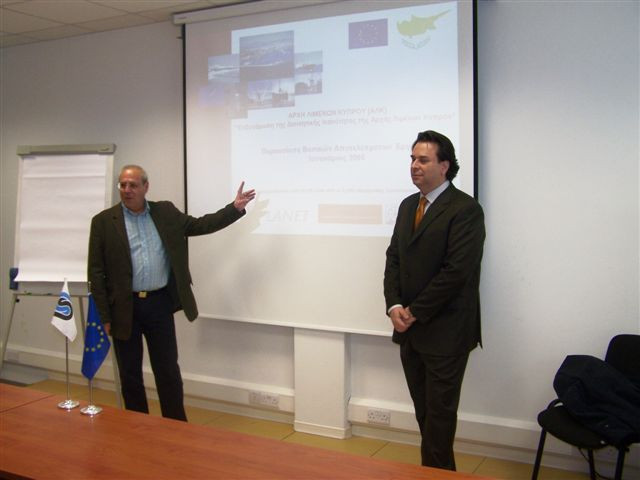
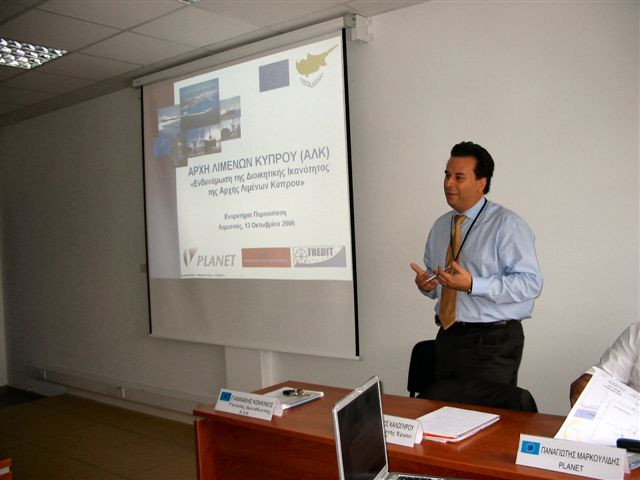
- “Information Day”, on the launch of the project, addressed by the Minister of Communications and Works, attended by representatives of the stakeholders, and high level decision makers, an event also covered by the media.
- Regular up-dating of CPA website with information on the project, especially on the planned training activities.
- Press announcements, especially of commencement of training activities.
- Email and telephone communication with all representatives of the stakeholders, as well as separate meetings on specific aspects of the project, of special relevance to their activities.
- Leaflet issued by CPA and distributed during presentations of results and on training days.
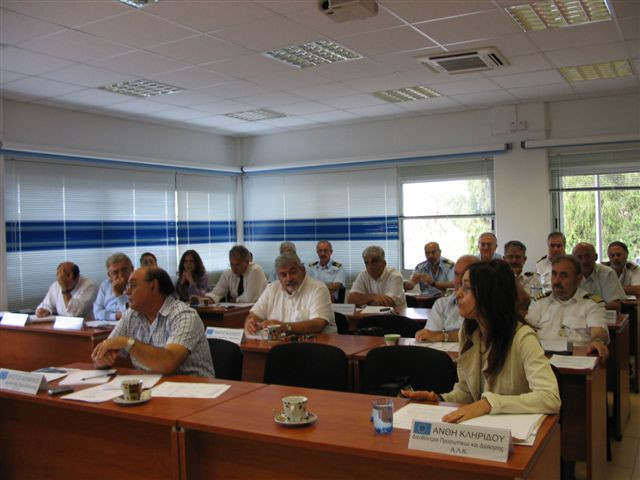
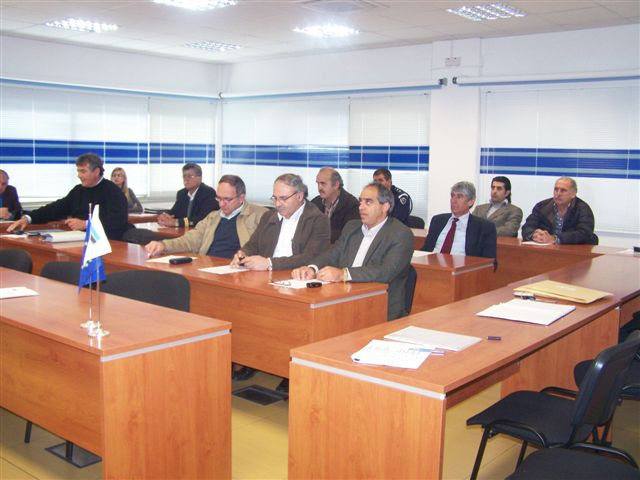
- To further facilitate participation in the training programme the 16-23 training actions of 2-15 days duration stipulated in the tender documents were organized into modules of shorter duration. In line with this objective, and also to better target needs of the various stakeholders and levels of personnel, training actions were organized into seminars, workshops or presentations according to subject matter and needs.
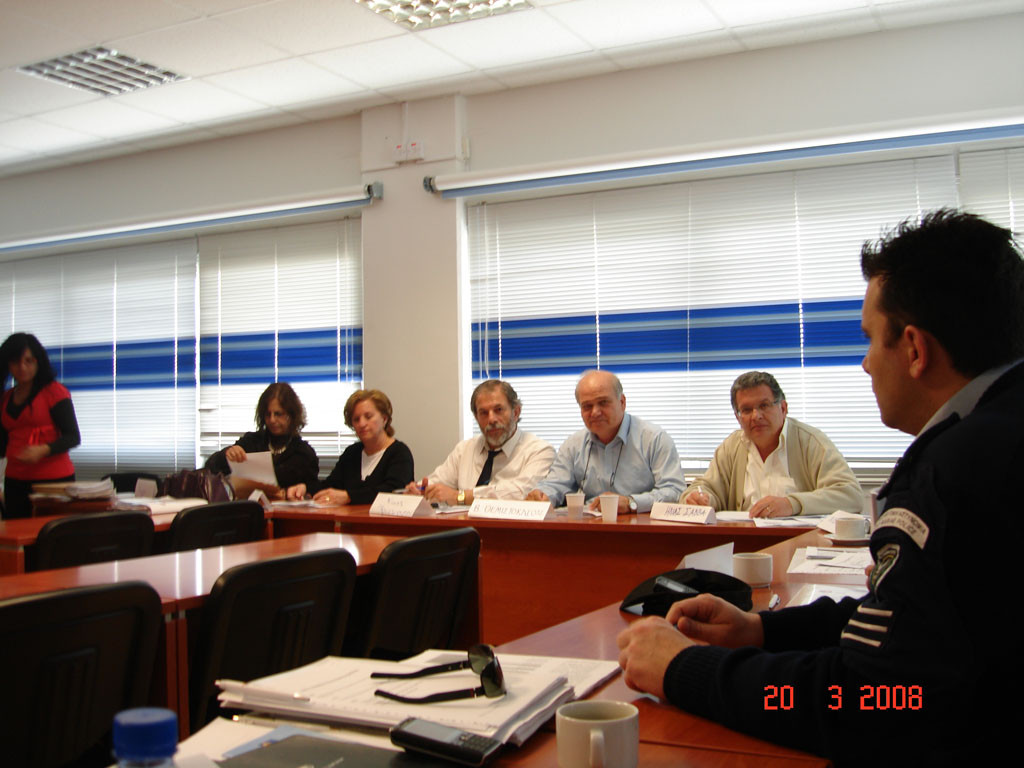
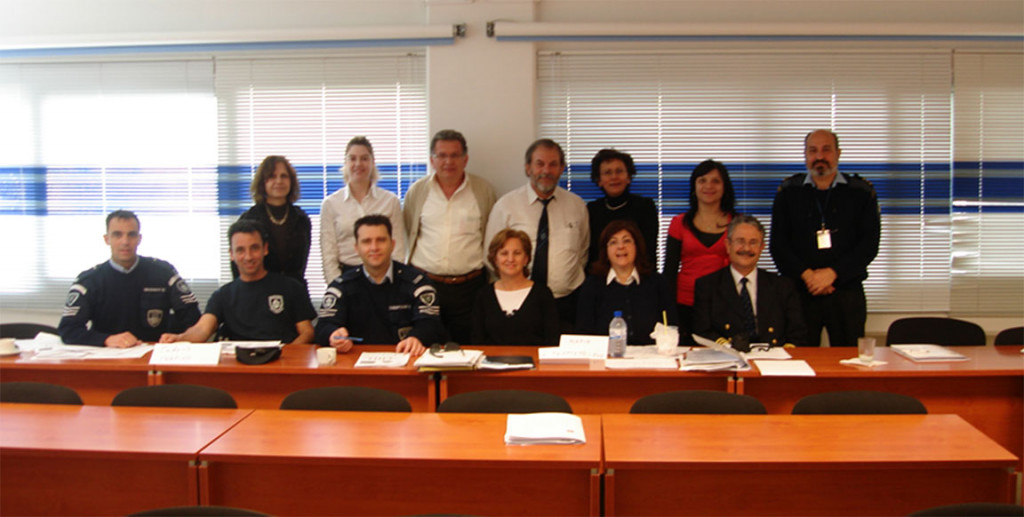
Photographic Material